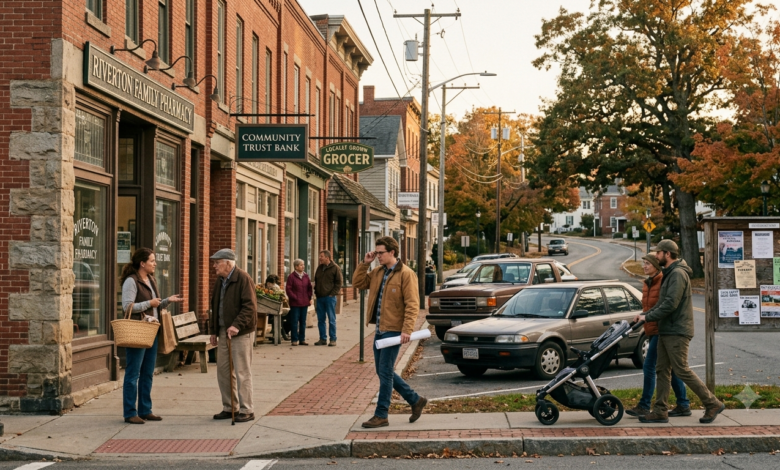
As 2026 enters its final quarter, American communities find themselves navigating a landscape shaped by shifting economic realities, structural housing shortages, and ongoing technological transformation. While macro-level discussions often dominate the national news cycle, the real impact of these developments is felt on main streets, in public school classrooms, and around family dinner tables across the country.
From small rural towns in the Midwest to rapidly growing metropolitan regions across the Sun Belt, local leaders and everyday residents are grappling with a core challenge: how to build resilient, livable communities in an era of persistent financial pressure and systemic change. Understanding the key American community issues in 2026 requires looking closely at how national economics and local policy intersect in daily life.
1. Cost of Living and Household Financial Pressure
Although headline economic indicators point to steady overall growth, household balance sheets remain tightly stretched. According to the Bureau of Labor Statistics, overall inflation eased to 3.4% by mid-2026, down from previous spikes. However, the cumulative effect of several years of elevated prices continues to impact local consumer behavior.
-
What is happening: Essential expenditures—specifically food, insurance, auto repairs, and energy—continue to absorb a larger percentage of monthly income.
-
Who is affected: Fixed-income retirees, low-wage hourly workers, and middle-income families with high dependent costs face the tightest budget constraints.
-
How communities are responding: Local food pantries, emergency utility-assistance funds, and community-action agencies report sustained high demand. In response, municipalities are expanding micro-grant programs and offering utility debt relief to prevent household displacement.
2. Housing Affordability and the Supply Shortage
Housing availability and cost remain among the most defining challenges for local vitality. The Joint Center for Housing Studies (JCHS) at Harvard University and the National Low Income Housing Coalition (NLIHC) both report severe national inventory deficits in 2026, particularly for entry-level buyers and low-income renters.
+-----------------------------------------------------------------------------------------+
|                              2026 U.S. Housing Snapshot                                 |
+---------------------------------------------------+-------------------------------------+
| Housing Metric                                    | Current Market Reality              |
+---------------------------------------------------+-------------------------------------+
| Affordable Rental Shortage (Extremely Low Income) | 7.2 Million Units (NLIHC)           |
| Starter Homes ($75k Household Income)             | Inventory down 60% vs. pre-2020     |
| Average Mortgage Rate Environment                 | Stabilized around 6.0% - 6.5%       |
| Severely Rent-Burdened (>50% income on rent)      | 74% of Extremely Low Income Renters |
+---------------------------------------------------+-------------------------------------+
-
Why it matters: Higher mortgage interest rates have created a persistent “lock-in” effect where existing homeowners are reluctant to sell, keeping inventory low and home prices near historical highs.
-
Community impact: Mid-sized cities, suburban hubs, and rural towns nearby are seeing rapid population inflows as families seek lower costs, accelerating local rent increases and straining municipal services.
-
Local solutions: City councils across the country are updating zoning codes to allow middle-housing options, such as duplexes, accessory dwelling units (ADUs), and transit-oriented developments.
3. Jobs, Wages, and the Changing Labor Market
The labor market in late 2026 has settled into what economic analysts describe as a “low-hire, low-fire” equilibrium. While overall unemployment remains relatively stable at 4.3%, hiring activity has cooled considerably compared to post-pandemic peaks.
+-----------------------------------------------------------------------------------+
|                           2026 Labor Market Dynamics                              |
+-----------------------------------------------------------------------------------+
|  [Low Layoff Rates]  ---> Maintains Stability for Existing Workers                |
|  [Slower Hiring]     ---> Creates Friction for Job Seekers & Recent Graduates     |
|  [Real Wage Growth]  ---> Moderate Gains (~1% above inflation) Offset Expenses    |
+-----------------------------------------------------------------------------------+
-
Workplace trends: Real wage growth has maintained a slight positive edge over inflation. However, entry-level opportunities for recent high school and college graduates have tightened.
-
Regional workforce adaptation: Local workforce investment boards are shifting resources toward vocational apprenticeships, green-tech installation, and health technology certifications to match local employer demand.
4. Healthcare Access and Rural Hospital Sustainability
Access to medical services remains unevenly distributed across American regions. Rural health systems, in particular, face structural financial challenges driven by shifting payer mixes, high operating expenses, and severe staffing shortages in specialized fields.
+-----------------------------------------------------------------------------------+
|                        Key Healthcare Pressures in 2026                           |
+----------------------------------------------------+------------------------------+
| Challenge                                          | Primary Impact Area          |
+----------------------------------------------------+------------------------------+
| Rural Hospital Budget Constraints                  | Emergency Care Access        |
| Nursing & Primary Care Staff Shortages             | Waiting Times & Scheduling   |
| Rising Prescription & Out-of-Pocket Expenses       | Household Medical Debt       |
+----------------------------------------------------+------------------------------+
To counter these pressures, states and regional health networks are accelerating the integration of telehealth services, expanding mobile care units, and relying on federally qualified health centers (FQHCs) to bridge gaps in primary care.
5. Technology, AI Integration, and Digital Infrastructure
Artificial Intelligence (AI) and automation are moving from technical concepts to noticeable tools within local economies. At the same time, expanding reliable high-speed broadband remains a foundational infrastructure goal for smaller communities.
-
Local business adoption: Small-to-medium enterprises (SMEs) are adopting AI tools for administrative workflows, inventory management, and customer service to offset higher operating costs.
-
Infrastructure deployment: Federal funding allocated through broadband expansion programs continues to roll out, bringing fiber-optic networks to previously underserved rural corridors and improving digital equity in underserved urban neighborhoods.
What to Watch Through the End of 2026
As local governments prepare their 2027 fiscal budgets in the final months of 2026, several key factors will determine community stability:
-
Federal Fiscal Decisions and Local Grant Budgets: Municipalities will closely monitor the continuation of federal community development grants and infrastructure funding streams.
-
Housing Market Movement: Any shifts in mortgage rates during the final quarter could signal whether housing turnover will increase in early 2027 or remain constrained.
-
Local Labor Demand: Holiday seasonal hiring trends will provide an early indicator of consumer confidence and small-business health heading into the new year.
American communities in late 2026 demonstrate remarkable adaptability despite real economic and logistical constraints. While national macroeconomic conditions establish the broader framework, local innovation—from zoning reform and workforce training to expanded rural healthcare delivery—remains the primary driver of community resilience.