
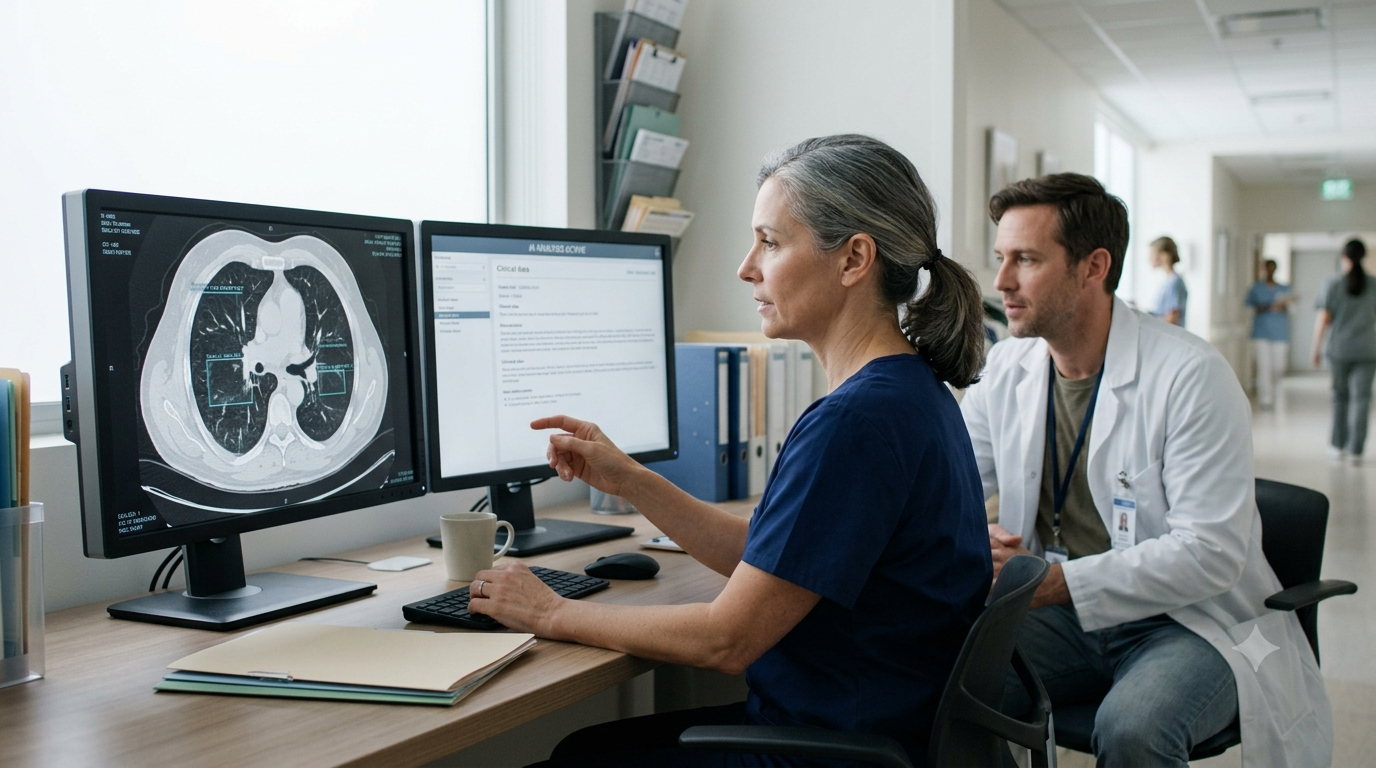
Modern healthcare stands at an unprecedented turning point. The integration of artificial intelligence (AI) and machine learning into clinical workflows is transforming how diseases are detected, how therapies are targeted, and how care is delivered. From recognizing subtle abnormalities in radiological scans to predicting patient deterioration hours before symptoms appear, AI is rapidly reshaping the medical landscape.
Rather than replacing human intelligence, AI is acting as an intellectual amplifier for healthcare professionals. By rapidly processing vast datasets, identifying hidden patterns, and reducing administrative burdens, artificial intelligence is building a more precise, efficient, and accessible healthcare system.
How AI Is Changing Medical Diagnosis
Early and accurate diagnosis is the cornerstone of effective medicine. AI is dramatically enhancing diagnostic speed and precision across several clinical domains.
Medical Imaging and Pattern Recognition
Radiology and pathology have become primary frontiers for AI application. Deep learning algorithms, trained on millions of anonymized medical images, can scan X-rays, MRIs, CT scans, and mammograms to spot microscopic anomalies:
-
Oncology: Computer-aided detection tools assist radiologists in evaluating suspicious lung nodules or microcalcifications in breast tissue earlier than the human eye might catch them.
-
Ophthalmology: Autonomous AI systems can analyze retinal images to detect diabetic retinopathy and age-related macular degeneration without requiring an immediate specialist reading.
-
Cardiology: AI models analyze echocardiograms and cardiac MRIs to measure heart chamber volumes and ejection fraction with high consistency.
Clinical Decision Support Systems (CDSS)
When integrated into Electronic Health Records (EHRs), AI tools serve as real-time clinical co-pilots. They analyze a patient’s complete medical history, lab results, vital signs, and genetic markers to flag potential diagnostic oversights, cross-examine drug interactions, and suggest evidence-based diagnostic pathways to attending physicians.
AI and Personalized Treatment: The Rise of Precision Medicine
Traditional medicine often relies on standardized treatments designed for the “average” patient. However, individual biology varies widely. AI enables precision medicine by matching therapies to a patient’s unique biological and genetic profile.
Genomics and Patient Data Analysis
Genomic sequencing generates massive quantities of data. Machine learning algorithms process these genomic profiles alongside real-world health outcomes to pinpoint specific genetic mutations driving diseases like cancer.
Custom Treatment Planning and Response Prediction
In oncology, AI platforms model how a specific tumor will likely respond to chemotherapy, targeted therapy, or immunotherapy. By simulating treatment scenarios, doctors can select the regimen most likely to succeed while minimizing unnecessary side effects.
Accelerating Drug Discovery and Pharmaceutical Research
Developing a new therapeutic traditionally takes over a decade and costs billions of dollars. AI is streamlining this timeline by transforming drug design from trial-and-error chemistry into a computational science.
Traditional vs. AI-Assisted Drug Development
-----------------------------------------------------------------------
Stage                Traditional Approach       AI-Assisted Approach
-----------------------------------------------------------------------
Target Discovery     2–4 years (manual)         Months (predictive modeling)
Lead Generation      1,000s tested physically   Millions screened virtually
Protein Folding      Years of lab mapping       Instant (e.g., AlphaFold)
Clinical Validation  10–15 years total          Significantly compressed
-----------------------------------------------------------------------
-
Target Identification: AI algorithms scan biomedical literature and genomic databases to discover novel biological targets (such as disease-causing proteins).
-
Molecular Design: Generative AI models design brand-new molecular structures optimized to bind with specific target proteins, reducing candidate selection from years to months.
-
Predicting Toxicity: Machine learning screens drug candidates virtually to predict toxicity and pharmacokinetic properties before entering animal or clinical trials.
How AI Is Improving Patient Care and Remote Healthcare
Beyond diagnosis and lab research, AI directly impacts daily patient experience and continuous clinical monitoring.
-
Remote Patient Monitoring (RPM): Wearable devices equipped with machine learning algorithms track heart rhythms, blood glucose levels, and oxygen saturation in real time, alerting care teams to irregular trends before a crisis occurs.
-
Early Warning Systems: Hospital-based predictive algorithms monitor inpatient vital signs, blood panels, and nursing notes to predict complications such as sepsis or acute kidney injury hours before clinical onset.
-
Virtual Health Assistants: Natural Language Processing (NLP) chatbots assist patients with symptom triage, medication reminders, and post-discharge care instructions, ensuring 24/7 engagement.
-
Administrative Automation: AI tools transcribe doctor-patient conversations into structured clinical notes, freeing physicians from hours of documentation and allowing them to focus directly on their patients.
Real-World Benefits of AI in Healthcare
The integration of AI offers tangible advantages for the entire medical ecosystem:
-
For Patients: Access to earlier disease detection, tailored treatment plans, fewer diagnostic errors, and continuous remote monitoring.
-
For Physicians: Reduced administrative burnout, faster access to relevant patient history, and data-backed support during complex cases.
-
For Hospitals: Operational efficiency, streamlined bed management, lower readmission rates, and optimized resource allocation.
Challenges, Risks, and Ethical Considerations
While the promise of AI is vast, responsible implementation requires addressing significant challenges:
-
Algorithmic Bias: If an AI model is trained primarily on datasets from a single demographic, it may perform poorly or inaccurately when applied to underrepresented populations.
-
Data Privacy and Cybersecurity: AI systems require access to vast amounts of sensitive patient health information, making robust encryption and strict compliance with privacy regulations (such as HIPAA and GDPR) essential.
-
The “Black Box” Problem: Deep learning models can arrive at conclusions through complex mathematical pathways that human clinicians cannot easily audit, raising accountability concerns.
-
Clinical Outcome Validation: Many AI tools are cleared based on analytical accuracy rather than proven long-term improvements in patient health outcomes. Prospective clinical validation remains a critical necessity.
Why Human Medical Expertise and Oversight Remain Essential
AI is a sophisticated tool, not an autonomous clinician. Medicine is as much an art as it is a science, relying heavily on human attributes that software cannot replicate:
-
Empathy and Compassion: Delivering difficult news, offering comfort, and building trust require a human touch.
-
Complex Clinical Context: A computer model evaluates numbers and images, but a doctor considers social determinants of health, patient preferences, subtle physical nuances, and holistic well-being.
-
Ethical Accountability and Shared Decision-Making: Final medical decisions and ethical responsibility must always lie with qualified healthcare professionals working collaboratively with their patients.
Important Medical Note: Artificial intelligence technologies are designed to support and enhance—not replace—the clinical judgment of qualified medical professionals. Readers should always consult a physician or licensed healthcare provider for personal health concerns, diagnostic evaluations, or treatment decisions.
The Future of AI-Powered Medicine
Looking ahead, the future of healthcare lies in hybrid intelligence—a seamless collaboration between human medical experts and advanced AI algorithms.
Future developments will likely include multimodal AI models capable of simultaneously analyzing a patient’s genomic sequencing, real-time wearable data, diagnostic imaging, and verbal history. As regulatory frameworks evolve and clinical validation deepens, AI will continue to make high-quality, personalized healthcare faster, safer, and more universally accessible.
-

-

-

-


