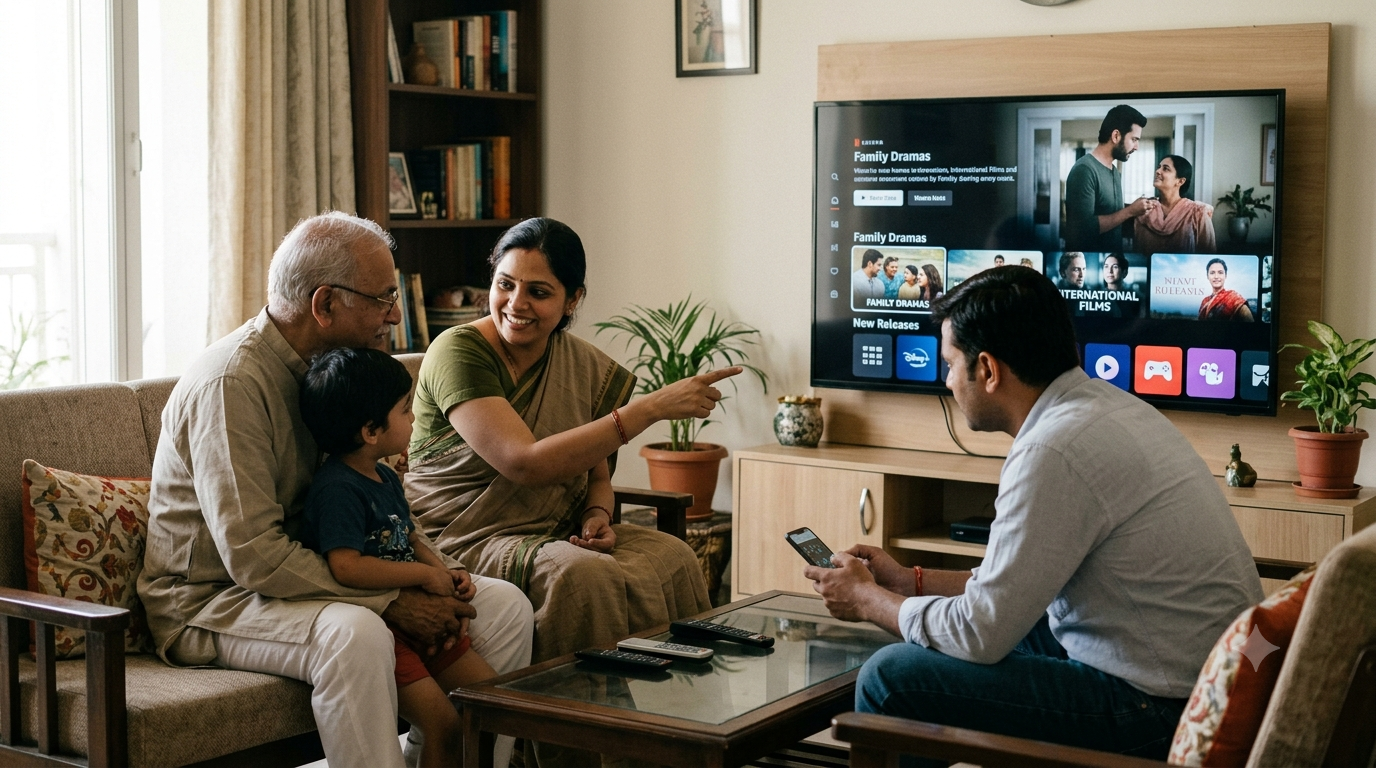
The entertainment landscape is undergoing its most profound structural transformation since the invention of the television. Where film distribution once depended strictly on physical movie theaters and broadcast networks dictated household viewing schedules, direct-to-consumer digital networks now define how stories are funded, distributed, and consumed.
What began as a convenient digital archive for licensed films and classic sitcoms has evolved into a multi-hundred-billion-dollar global ecosystem. Streaming platforms are no longer just alternative distribution pipelines; they are the primary engines driving content creation, audience behavior, and business models across the global entertainment industry.
How Streaming Changed Entertainment
The fundamental shift in media consumption stems from a transition from scheduled linear programming to on-demand access. Historically, media distribution was defined by artificial scarcity: limited theater screens, strict broadcast time slots, and region-locked physical releases.
Streaming eliminated these spatial and temporal barriers. Digital infrastructure enabled platforms to host massive, borderless catalogs accessible simultaneously across smart TVs, tablets, and smartphones. This shift transferred control of the viewing experience directly to the consumer, establishing on-demand entertainment as the baseline expectation for modern audiences.
The Impact of Streaming on Movies
The cinematic landscape has seen its traditional operating models completely reshaped. For decades, the film industry operated on a rigid, sequential release timeline: theatrical exhibition, followed months later by physical home video, pay-TV, and eventually network broadcast. Streaming platforms disrupted this cascade by shortening—and in some cases eliminating—exhibition windows.
Traditional Windowing:
[ Theatrical Release ] ---> (90+ Days) ---> [ Home Video / VOD ] ---> [ Pay-TV / Streaming ]

Modern Streaming Era:
[ Simultaneous / Shortened Theatrical ] ===> Direct Access on Digital Platforms
This structural shift forced legacy Hollywood studios to rethink greenlight strategies. Mid-budget dramas, original comedies, and adult-oriented thrillers—once the bedrock of theatrical box office revenues—have largely migrated to digital platforms. Meanwhile, traditional cinema releases have increasingly concentrated on high-concept, visual-effects-driven event films designed to justify the premium price of a theater ticket.
How Television Has Been Transformed
Television has experienced a parallel overhaul in structure, pacing, and narrative format. The traditional network model depended on 22-episode seasons, structured around rigid commercial breaks, weekly release cadences, and syndication-friendly episodic formats.
Streaming introduced three major structural changes to television production:
-
Narrative Flexibility: Showrunners are no longer bound by strict 22-minute or 44-minute episode runtimes, allowing scenes to breathe or wrap up naturally according to narrative pacing.
-
Release Dynamics: Binge-releasing entire seasons on launch day created cultural “event viewing” windows, though many platforms now employ hybrid weekly releases to sustain long-term engagement and subscriber retention.
-
Global Pre-Greenlighting: Episodic storytelling is now framed for immediate international distribution rather than localized territory-by-territory sales.
The New Economics of Streaming
The financial mechanics powering the streaming industry have entered a crucial secondary phase. The initial growth era—driven by aggressive subscriber acquisition funded by low interest rates and massive spending—has given way to a sharp focus on profitability, average revenue per user (ARPU), and retention.
| Monetization Model | Description | Primary Revenue Source |
| SVOD (Subscription Video on Demand) | Ad-free, tier-based recurring subscription | Consumer subscription fees |
| AVOD (Ad-Supported Video on Demand) | Lower-cost tier featuring targeted commercials | Consumer fees + targeted ad networks |
| FAST (Free Ad-Supported Streaming TV) | Linear-style themed channels streaming live | 100% advertising revenue |
| Hybrid Bundles | Cross-platform packages (e.g., Streamer + Telecom + Music) | Combined consumer & partner licensing |
To offset plateauing subscriber growth in mature markets, major platforms have rolled out ad-supported tiers, strict password-sharing limitations, and consolidated content bundles. Advertising revenue, powered by targeted Connected TV (CTV) ad tech, has re-emerged as a dominant driver of long-term platform profitability.
How Streaming Is Changing What Gets Made
Data analytics now sit alongside human intuition in studio greenlight meetings. Platforms track granular viewer behavior—including completion rates, drop-off timestamps, search queries, and re-watch frequencies—to determine which projects get funded.
This data-driven approach has democratized global content discovery. Subtitled non-English productions, such as South Korean thrillers, Spanish dramas, and Scandinavian noirs, regularly top global viewership charts. Streaming infrastructure proved that international audiences will engage with localized storytelling if distribution friction is removed.
Simultaneously, the creator economy is converging with traditional media. Digital-native creators from YouTube and social video environments are increasingly securing high-budget development deals, blurring the line between traditional Hollywood talent and independent digital video creators.
The Rise of Personalized Entertainment
Modern streaming platforms operate less like broadcast networks and more like hyper-personalized recommendation engines. Advanced algorithms and machine learning models analyze viewing histories, time-of-day habits, and micro-genre preferences to curate unique home screens for individual users.
User View Habits ---> Algorithmic Processing ---> Dynamic UI & Thumbnail Rendering ---> Instant Content Discovery
This level of customization extends beyond mere recommendations. Platforms dynamically alter artwork thumbnails, preview clips, and row arrangements based on what an individual user is most likely to click. As predictive systems mature, user interfaces are shifting from passive catalogs to active, real-time discovery interfaces designed to minimize browsing fatigue.
Streaming’s Biggest Challenges
Despite its dominance, the digital entertainment model faces notable structural pressures:
-
Subscription Fatigue: With dozens of standalone platforms competing for household budgets, consumers are actively managing monthly spending by rotating or canceling subscriptions (“churn”).
-
Discovery Friction: Massive catalogs have inadvertently created decision paralysis for users scrolling through endless menus of content.
-
Rising Production Costs: High competition for top-tier intellectual property and talent has inflated per-episode budgets, forcing studios to cut back on lower-performing projects.
-
Content Preservation Risks: As digital platforms purge underperforming titles to minimize licensing fees and tax liabilities, concerns over digital archival and media preservation continue to grow.
What Streaming Means for Cinemas and Traditional Television
Rather than completely replacing older media, streaming has forced traditional channels to adapt and specialize.
Movie Theaters are pivoting toward experiential events. Cinemas are investing heavily in premium large-format screens (IMAX, Dolby Cinema), enhanced concessions, and interactive event screenings to offer an environment that home setups cannot replicate.
Linear Broadcast TV is increasingly concentrating on live, unpredictable events—primarily sports rights, breaking news, and major award shows—where synchronous, real-time viewing still commands high premium advertising rates.
What the Future of Streaming Could Look Like
The next decade will likely see the boundary between watching entertainment and interacting with it continue to dissolve. Key vectors shaping the next phase of digital media include:
-
Cross-Industry Bundling: Expect platform consolidation to mirror the traditional cable package, with multi-service bundles combining video, gaming, music, and e-commerce perks.
-
Interactive and Shoppable Media: Native integration of shoppable elements within video feeds, allowing viewers to purchase items featured on screen in real time.
-
AI-Assisted Pipelines: Generative tools streamlining visual effects, real-time dubbing, localized subtitling, and post-production workflows.
-
Hybrid Exhibition Models: Dynamic release schedules tailored by title—blockbusters receiving protected theatrical windows, mid-tier features launching as hybrid digital events, and niche projects going straight to stream.
Streaming has permanently reshaped the entertainment ecosystem, dismantling decades-old distribution monopolies and placing unprecedented power in the hands of the audience. While this shift has created challenges—including market saturation, subscription management friction, and shifting studio economics—it has also opened unprecedented global pathways for storytellers and viewers alike.
As technology evolves through predictive personalization, interactive formats, and hybrid business models, the future of entertainment will not belong exclusively to the screen in the theater or the box in the living room. It will belong to an interconnected digital network where access is instant, content is global, and the viewer remains firmly in control.
-

-

-

-